
INSTALLATIONS
Groom’s works are „phainómena“. They are artifacts of an essentially non-factual dimension – of what is possible beyond any phenomenological reality. The concept, which carries spiritual connotations, is related to the term „phainómena“. They are artifacts of an essentially non-factual dimension – of what is possible beyond any phenomenological reality. The concept, which carries spiritual connotations, is related to the term „phainómena“. They are artifacts of an essentially non-factual dimension – of what is possible beyond any phenomenological reality. The concept, which carries spiritual connotations, is related to the term „phainómenon“ („the apparent“) as used in Greek philosophy. Originally it only related to what was visible, but was then extended to embrace anything that could be perceived through the senses so as to describe what we could subjectively take in while looking at something. Even here, there is a distinction to be made between sensory perceptions as such and any „real“, „true“, or „objective“ world behind them.
The distinction was first made much of by Plato, who sets sensory phenomena clearly apart from „ideas“. Plato’s view of each is quite clear: „phenomena“ are secondary (and inferior) to the „ideas.“ In his philosophy of ideas, Plato distinguishes between the worlds of the ideas and appearances (phenomena), closely related to which is the concept of „being the cause“. Being the cause means, for example, that the idea of beauty (justice, sameness) is itself the cause of individual things that are beautiful (just, equal, etc.) being exactly that. So in his view, a rose is beautiful because it shares in the idea of beauty. Groom’s paintings are capable of realizing this to an unusual degree, in the double sense Plato describes: as shares in the idea of beauty.
Groom’s paintings are capable of realizing this to an unusual degree, in the double sense Plato describes: as shares in the idea of beauty. Groom’s paintings are capable of realizing this to an unusual degree, in the double sense Plato describes: as a „phainómenon“ and as „being the cause.“ The former relates to the almost unreal character of his works, which, viewed in and for themselves, all seem to float.
– Beate Reifenscheid

Lenbachhaus and Kunstbau Munich"
Congress Park, Hanau/Frankfurt"
OIL PAINTINGS FROM THE CURRENT COLLECTION
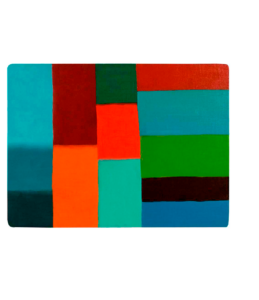
Oil on Canvas
48 x 35 cm
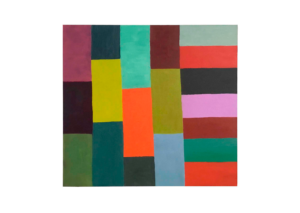
Oil on Canvas
63 x 58 cm
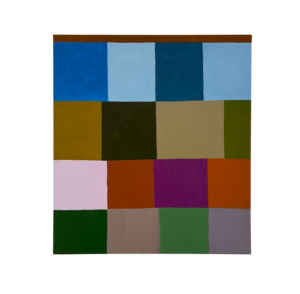
Oil on Canvas
42 x 50 cm